
What is the best quality PVC for ID cards?

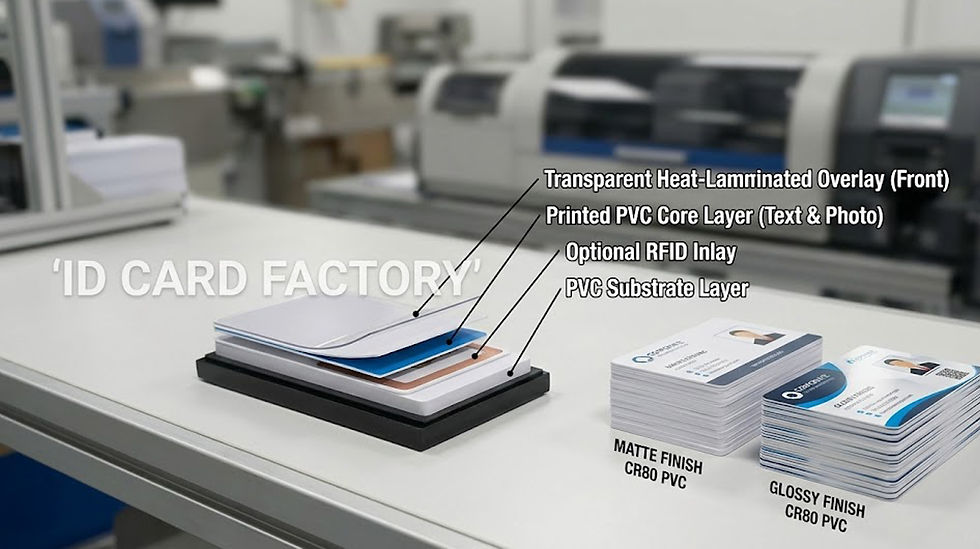
The best quality PVC for ID cards is virgin, high-grade PVC manufactured specifically for ID card and smart card applications, combined with multi-layer construction and heat-based lamination. In India, professional ID card manufacturers use CR80-grade PVC sheets with protective overlays to ensure strength, flexibility, print clarity, and long-term durability. Factory-direct manufacturers like ID CARD FACTORY rely on these standards to produce ID cards that last for years under daily use.
This guide explains what “best quality PVC” actually means, how to identify it, and why it matters for schools, offices, colleges, and institutions.
Introduction
Not all PVC used in ID cards is the same. Two cards may look identical on day one but perform very differently after a few months. Low-grade PVC bends permanently, cracks at edges, fades under sunlight, or peels after lamination. High-quality PVC maintains shape, color, readability, and scan performance even in harsh Indian conditions such as heat, humidity, sweat, and dust.
Understanding PVC quality helps organizations avoid repeated reprints and unnecessary costs.
Virgin PVC vs Recycled PVC (Most Important Difference)
Virgin PVC (Best Quality)
Virgin PVC is made from fresh polymer resin without recycled content.
Key benefits:
Uniform thickness and density
High flexibility without cracking
Excellent print adhesion
Clean lamination bonding
Long lifespan
This is the preferred and recommended PVC for professional ID cards.
Recycled or Mixed PVC (Lower Quality)
Recycled PVC may:
Contain impurities
Have uneven thickness
Crack near punched areas
Show color inconsistency
It is cheaper upfront but unsuitable for long-term ID cards.
CR80-Grade PVC (Industry Standard)
The best quality PVC ID cards follow the CR80 international standard, which defines:
Standard card size
Uniform thickness
Smooth surface finish
CR80-grade PVC ensures:
Compatibility with card readers and printers
Smooth use in holders and lanyards
Consistent feel across batches
Any professional ID card should meet CR80 specifications.
Multi-Layer PVC Construction (Critical for Quality)
High-quality PVC ID cards are never single-sheet.
They consist of:
Printed PVC core layer (photo, text, logo)
Transparent overlay layers on one or both sides
Heat-and-pressure fusion bonding
This structure prevents peeling, surface damage, and fading.
Best Lamination Material for PVC ID Cards
Lamination quality directly affects PVC performance.
Heat-Laminated PVC Overlays (Best)
Fused permanently with the card
Scratch-resistant
Moisture-proof
Long-lasting clarity
Cold Lamination (Avoid)
Adhesive-based
Peels over time
Traps dust and moisture
Only heat lamination should be used for premium PVC cards.
Surface Finish: Matte vs Glossy PVC
Both are high quality when laminated properly:
Glossy PVC
Bright colors
Smooth surface
Easy to clean
Matte PVC
Reduced glare
Premium corporate appearance
Better readability under lighting
Choice depends on usage, not quality difference.
PVC Quality for Barcode, QR, and RFID Cards
Best-quality PVC supports:
Sharp barcode and QR printing
Embedded RFID inlays
Stable scanning performance over time
Poor PVC warps during lamination and causes scan failures.
Thickness and Flexibility Balance
High-quality PVC:
Is flexible but returns to shape
Does not crease permanently
Does not feel brittle
Too thin = bends easilyToo hard = cracksThe best PVC balances strength and elasticity.
How to Identify High-Quality PVC Before Ordering
Ask your supplier:
Is the PVC virgin or recycled?
Does it meet CR80 standards?
Is lamination heat-based?
Is the card multi-layered?
Can repeat batches match exactly?
Clear answers indicate professional-grade PVC.
Common PVC Types to Avoid
Sticker-based PVC cards
Thin plastic sheets without overlays
Cold-laminated cards
Non-standard thickness cards
These fail quickly and increase replacement costs.
Why Best-Quality PVC Is Cost-Effective
Although premium PVC costs slightly more upfront, it:
Lasts 3–5 times longer
Reduces reprints
Maintains professional appearance
Works reliably with access systems
Over time, it is significantly cheaper than low-grade alternatives.
Conclusion
The best quality PVC for ID cards is virgin, CR80-grade PVC with multi-layer construction and heat-laminated protective overlays. This combination ensures maximum durability, print clarity, flexibility, and long-term reliability—especially important in Indian environments.
Choosing the right PVC is not about appearance on day one; it is about performance over years of daily use.



Comments